
POST-MATCH CONDUCT UNDER SCRUTINY: WHAT HAPPENS NEXT?
Saturday, September 5, 2026
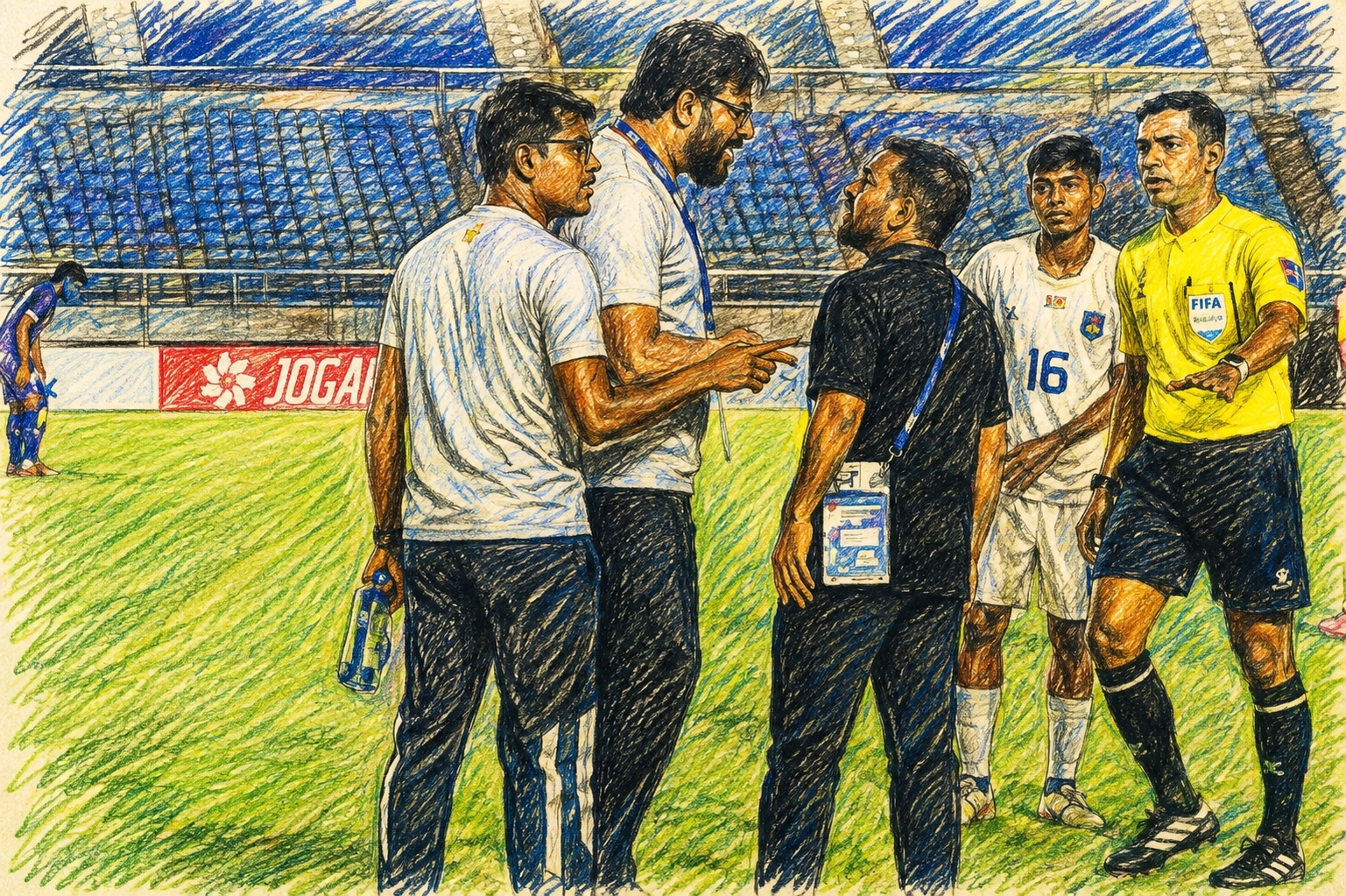
POST-MATCH CONDUCT UNDER SCRUTINY: WHAT HAPPENS NEXT?
Alleged abusive language and obscene gesture by Sri Lanka U20 assistant coach after full-time
The focus surrounding the Sri Lanka U20 team’s AFC U20 Asian Cup qualifying campaign has extended beyond the result on the pitch following an alleged post-match incident involving a member of the Sri Lankan coaching staff.
Following the Sri Lanka U20 vs Maldives U20 match on 3 September 2026, reports and footage circulating around the incident allege that a Sri Lankan assistant coach directed abusive language and an obscene/sexual gesture toward members of the opposing side after the final whistle.
At this stage, the incident should be treated as an allegation unless and until AFC makes an official disciplinary determination.
But if the incident was witnessed and recorded by the Match Commissioner or other match officials, the matter does not necessarily end when the referee blows the final whistle.
WHAT HAPPENS AFTER THE MATCH?
In an AFC competition, incidents involving team officials can be reported after the match and subsequently considered through the relevant disciplinary process.
The Match Commissioner’s report is particularly important.
If the Match Commissioner witnessed the alleged behaviour, the incident could be included in the official match documentation. The referee and other officials may also provide their own reports.
AFC can then assess whether the conduct warrants disciplinary proceedings.
The fact that the alleged incident occurred after full-time does not automatically mean that it falls outside the disciplinary process.
WHY THE NATURE OF THE INCIDENT MATTERS
There is an important difference between a coach expressing frustration and a team official allegedly using abusive language combined with an obscene gesture directed toward an opponent.
If established, such behaviour could potentially be considered under AFC disciplinary provisions relating to offensive, insulting or abusive conduct, and potentially other provisions concerning conduct that damages the image or reputation of football.
The exact disciplinary article and sanction would depend on the circumstances, the evidence available and how AFC classifies the incident.
WHAT EVIDENCE COULD AFC CONSIDER?
A disciplinary authority does not necessarily have to rely on a single report.
Potential evidence can include:
* Match Commissioner’s report
* Referee’s report
* Reports from other match officials
* Official match footage
* Video recordings of the incident
* Photographs
* Statements from witnesses
* Written explanations from the coach or Football Federation
If clear video footage exists showing the alleged gesture and the context in which it occurred, that could become relevant to any subsequent disciplinary assessment.
COULD THE ASSISTANT COACH BE SUSPENDED?
Yes, a suspension is possible if AFC determines that a disciplinary offence was committed.
Depending on the applicable provision and classification, possible disciplinary consequences can include:
* Match suspension
* Financial penalty
* Formal warning or reprimand
* Restrictions on participation in AFC matches
* Additional disciplinary measures in more serious circumstances
The actual punishment cannot be predicted with certainty until AFC determines the applicable offence and considers the evidence.
DOES IT MATTER THAT THE REFEREE DID NOT SHOW A RED CARD?
Not necessarily.
A post-match incident may not result in a card on the field because the match has already ended. That does not necessarily prevent the incident from being reported and subsequently reviewed through disciplinary channels.
This is precisely why the Match Commissioner’s report and other official reports can be important.
THIS IS NOW A MATTER FOR THE DISCIPLINARY PROCESS
Football is a highly competitive sport, and emotions can run high immediately after a difficult result.
But national-team staff representing a country in an AFC competition are expected to maintain appropriate standards of conduct.
There is a clear distinction between passionate disagreement and abusive or obscene behaviour directed at opponents.
If the allegations surrounding this incident are substantiated, it would be for the appropriate AFC disciplinary body to determine the offence and sanction — not social media and not supporters.
DROP BALL’S VIEW
Whatever the circumstances, coaches and officials representing Sri Lanka carry a responsibility that goes beyond the final whistle.
At U20 level, players are still developing not only as footballers, but also in attitude and character. Abusive language, disrespectful behaviour or inappropriate gestures should never influence the mindset or conduct of our players.
Football authorities must also look beyond results when selecting national-team coaches. Professionalism, discipline, leadership and the ability to set the right example should be equally important. The decisions made today can shape the future of our players and our football culture.
These standards should also be firmly established in school and youth football. Today’s school players are tomorrow’s national-team players, and professionalism must be encouraged from the grassroots level.
Rather than allowing incidents like this to divide us, we should use them as an opportunity to reflect, improve and build a stronger football culture.
For now, the appropriate approach is to allow the official process to take its course and await any disciplinary decision from the AFC.
If the AFC opens a disciplinary case, its decision — including the applicable article and any sanction — will provide the definitive outcome.
DROP BALL | SRI LANKA FOOTBALL


